
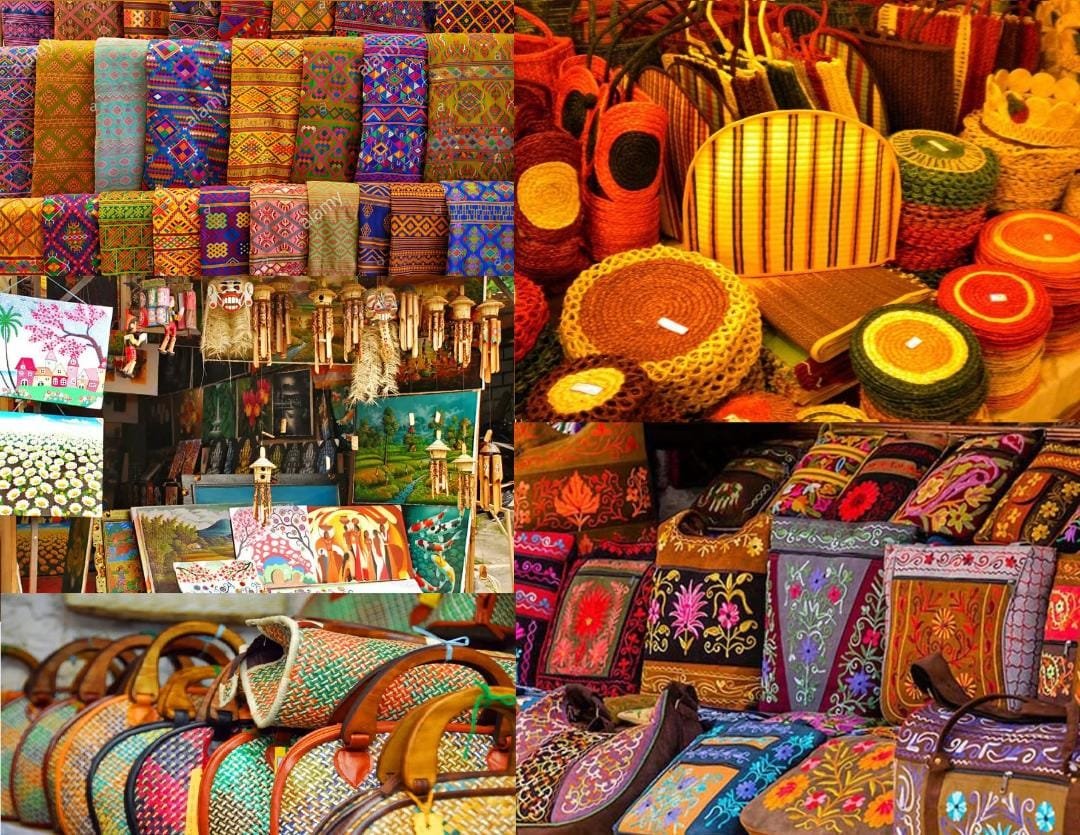
Global overview
Crafting is more than just a pastime; it’s a universal language that transcends borders. From the sun-drenched streets of Uzbekistan to the bustling markets of Morocco, artisans weave stories into every stitch, carve meaning into wood, and paint life onto fabric. Join us as we explore the rich tapestry of handicrafts from around the world—each thread a testament to human ingenuity, tradition, and resilience.
Suzanis (Uzbekistan)
Keywords: Uzbek embroidery, suzani motifs, chain stitch, cross stitch, satin stitch, symbolic designs, ancient suzanis, Bukhara, Khiva
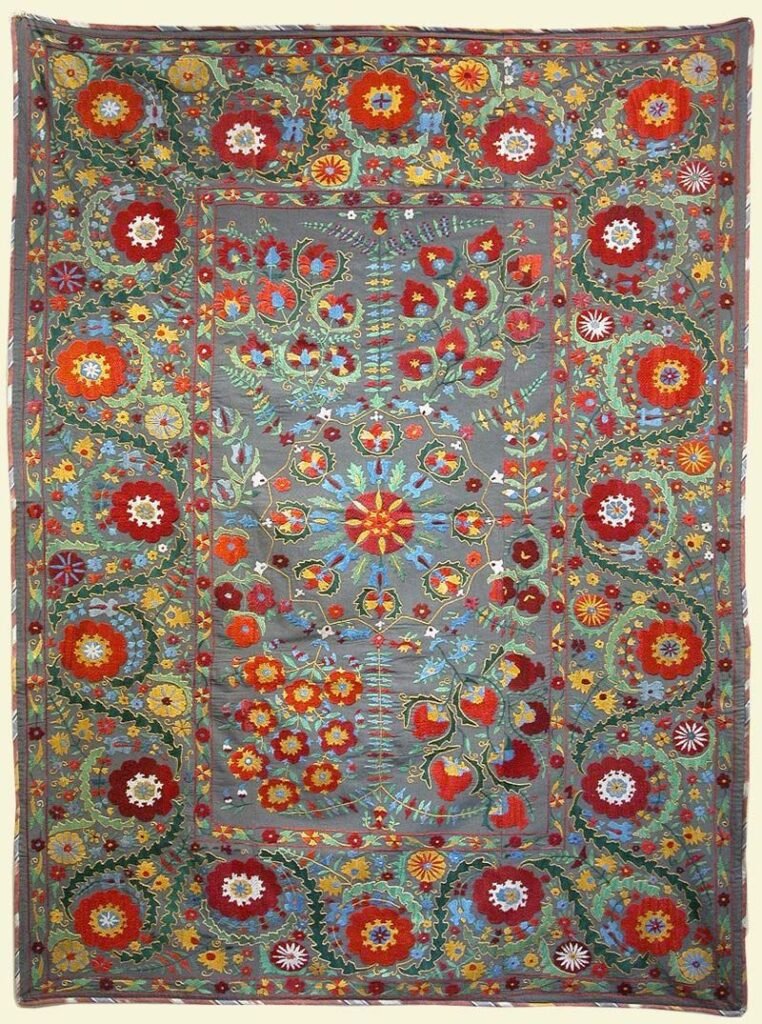
Exquisite Suzani Embroidered Textile
- Origin and Meaning:
- Suzani is an art form that involves sewing colorful silk threads onto a fabric base.
- The delicate needlework creates intricate patterns, reflecting the rich cultural heritage of Central Asia.
- The word “suzani” itself evokes craftsmanship, tradition, and the hands of skilled artisans.
- Materials and Techniques:
- Base Fabric: Suzanis typically have a cotton base (sometimes silk), providing a canvas for the vibrant embroidery.
- Silk or Cotton Thread: Artisans use silk or cotton threads to create the intricate designs. The choice of thread affects the texture and sheen of the final piece.
- Designs and Motifs:
- Suzanis feature a wide range of motifs, each carrying its own symbolism and regional significance.
- Bukhara Suzani: These textiles often depict vines with serrated leaves and lattices of red-hued flowers.
- Khodjent Suzani (Khujand, Tajikistan), Lakai Suzani, Nurata Suzani, and others showcase unique patterns influenced by local traditions and aesthetics.
- Historical Significance:
- Suzanis have evolved over centuries within Uzbek families.
- Traditionally, they were made by Central Asian brides as part of their dowry and presented to the groom on the wedding day.
- Surviving examples from before the late 18th and early 19th centuries are rare, but they belong to an ancient tradition.
- Expression of Lifestyle and Artistry:
- Embroidery has become an integral part of the Uzbek lifestyle, expressing creativity, cultural identity, and love for beauty.
- Suzanis adorn homes, walls, and ceremonial occasions, carrying stories of generations past.
Whether displayed as tablecloths, bedspreads, or wall hangings, Uzbek Suzanis continue to captivate with their timeless beauty and intricate craftsmanship
Mandoos (Oman)
Keywords: Omani chests, walnut, rosewood, inlaid designs, bridal chests, Portuguese influence
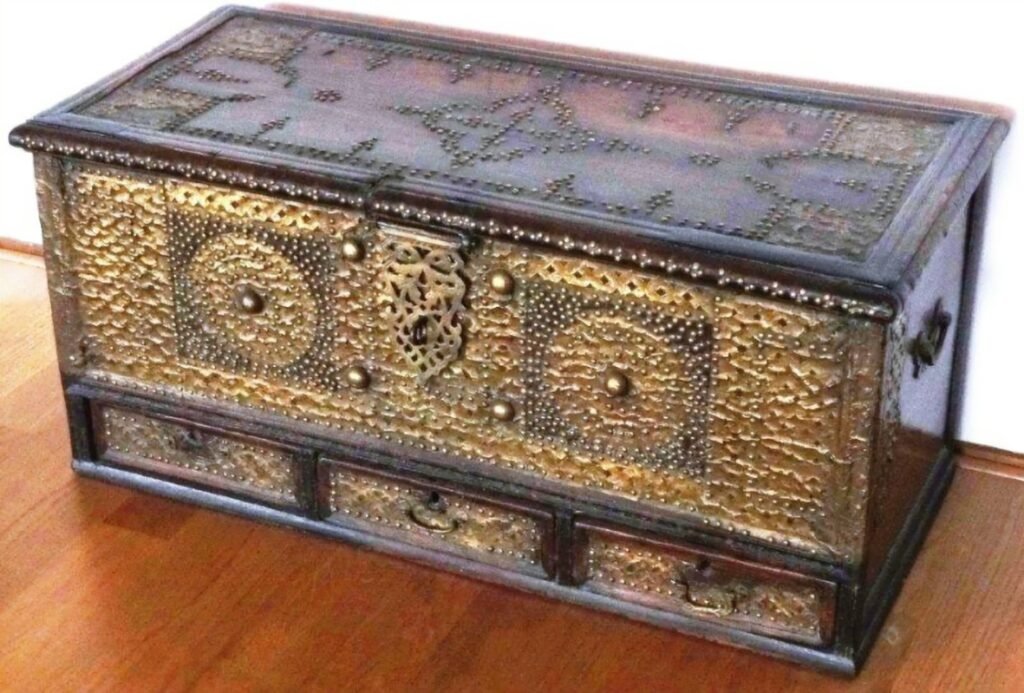
Mandoos antique Omani wedding-chest (Bombay style)
- Origins and Significance:
- The Mandoos is deeply rooted in Omani tradition and craftsmanship.
- Skilled Omani artisans meticulously create these chests with great care and attention to detail.
- They were historically used to safeguard personal belongings, precious items, and important documents.
- Materials and Craftsmanship:
- Wood: Good-quality Mandoos chests were traditionally made from either rosewood or teak.
- Inlay Work: The chests are adorned with brass plates or studs in intricate Islamic and geometric designs.
- Each Mandoos reflects the artisan’s skill and creativity, making it a unique piece.
- Function and Use:
- Women: Women used Mandoos chests to store clothes, jewelry, and other valuables.
- Men: Men utilized them for keeping clothes, weapons, and the traditional khanjar (curved dagger).
- Occasions: Mandoos chests played a significant role in daily life, especially during special occasions like weddings. Some even had secret pockets for storing jewelry.
- Modern Appreciation:
- Today, Mandoos chests continue to be valued for their historical significance and aesthetic appeal.
- Tourists and expatriates appreciate their craftsmanship and often repurpose old Mandoos doors into coffee tables.
Batik (Sri Lanka)
Keywords: Sri Lankan village craft, waxing and dyeing, untutored artists, bright wall hangings, JEZ LOOK BATIK, A Wax-Resist Dyeing Technique
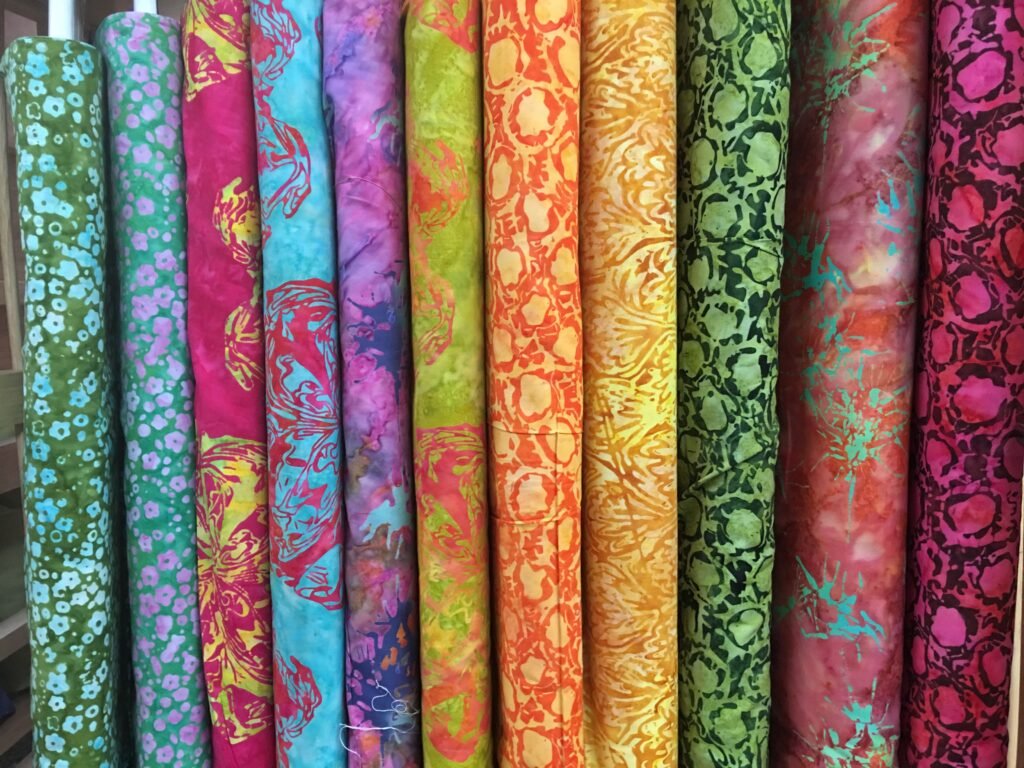
Batik Fabrics Samples
- The Process:
- Wax Resist: Batik artists use a wax-resist technique to create captivating fabric patterns.
- Hot Wax Application: They apply hot wax to specific areas of the fabric, creating barriers that prevent dye penetration.
- Dyeing: The fabric is then immersed in dye, and the waxed areas remain untouched.
- Multiple Layers: Artists repeat the process, adding more layers of wax and dye to achieve intricate designs.
- Cracking Effect: The cracks in the wax create unique patterns, adding to the charm of Batik.
- Vibrant Patterns and Colors:
- Sri Lankan Batik is known for its vibrant colors and bold designs.
- Floral Motifs: Flowers, leaves, and vines are common motifs, reflecting the island’s lush tropical landscape.
- Geometric Patterns: Intricate geometric shapes and abstract designs also grace Batik fabrics.
- Cultural Significance:
- Batik is representative of Sri Lanka’s history, aesthetics, and artisanal skill.
- It plays a significant role in the country’s cultural identity.
- Traditional Clothing: Batik saris, shirts, and dresses are worn during special occasions, weddings, and festivals.
- Artisans and Innovations:
- Sonali Dharmawardena, a pioneer in Sri Lankan Batik designs, has added her individual stamp to this ancient craft.
- She experiments with new technologies and innovations, enhancing the value and texture of traditional Batik fabrics1.
- Economic Importance:
- The Batik industry provides employment opportunities to thousands of people, particularly in rural areas.
- It contributes significantly to Sri Lanka’s tourism industry, attracting visitors who appreciate the artistry and cultural heritage.
Whether you’re admiring a Batik sari or exploring a vibrant Batik shop, this colorful tradition continues to weave its magic across the island of Sri Lanka.
Kantha (India and Bangladesh)
Keywords: Kantha embroidery, layered fabrics, running stitch, herringbone stitch, quilts, traditional clothing, The Art of Stitching Stories
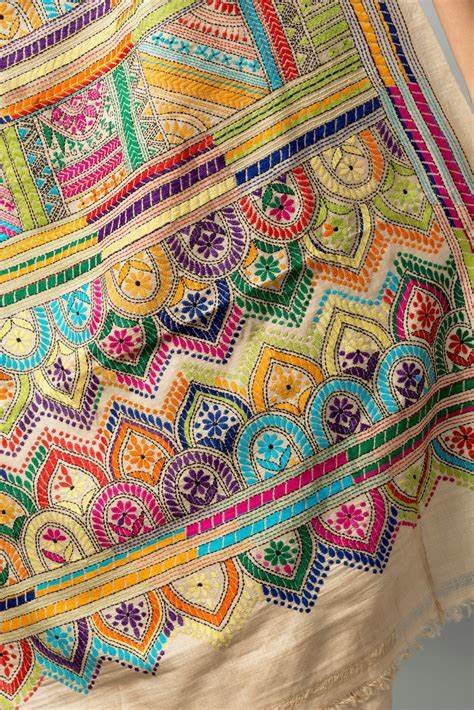
Kantha Sari Daywear
- Origins and Significance:
- Kantha, also spelled as kanta or qanta, is a type of embroidery that flourishes in the Bengal region.
- Geographical Spread: It is particularly prevalent in Bangladesh and the Indian states of West Bengal, Tripura, and parts of Assam.
- Historical Roots: Kantha has deep historical roots, dating back centuries. Rural women have practiced this art form, passing down techniques and motifs through generations.
- The Kantha Stitch:
- Running Stitch: Kantha is characterized by a simple running stitch along the edges of fabric.
- Soft Dhotis and Saris: Traditionally, soft dhotis (men’s garments) and saris (women’s garments) were used as the base material for Kantha embroidery.
- Lepkantha and Sujni Kantha: Depending on the use of the finished product, they were known as Lepkantha (for quilts) or Sujni Kantha (for decorative covers).
- Motifs and Themes:
- Floral and Animal Motifs: Kantha embroidery features beautiful motifs of flowers, animals, birds, and geometrical shapes.
- Everyday Activities: Artisans also depict themes from everyday life—scenes from villages, agricultural work, and cultural celebrations.
- Wrinkled, Wavy Effect: The running stitches give the cloth a slightly wrinkled, wavy effect, adding to its charm.
- Contemporary Kantha:
- Expanded Applications: Modern Kantha extends beyond quilts. It is now applied to a wider range of garments, including sarees, dupattas, shirts, and more.
- Materials: Cotton and silk are commonly used for contemporary Kantha-stitched fabrics.
- Complex Production Model: The craft industry involves a multi-staged production model, combining tradition with innovation1.
- Cultural Heritage and Aesthetic Value:
- Tourist Attraction: Kantha is very popular with tourists visiting the Bengal region of the Indian subcontinent.
- Handmade Characteristics: Its aesthetic value lies in its handmade characteristics, reflecting the skill and creativity of the artisans.
Whether draped as a saree, displayed as a wall hanging, or used as a light blanket, Kantha stitches tell stories of resilience, community, and the beauty of everyday life.
Tapa Cloth (Pacific Islands)
Keywords: Tapa cloth, bark cloth, natural dyes, geometric patterns, ceremonial use, The Art of Barkcloth
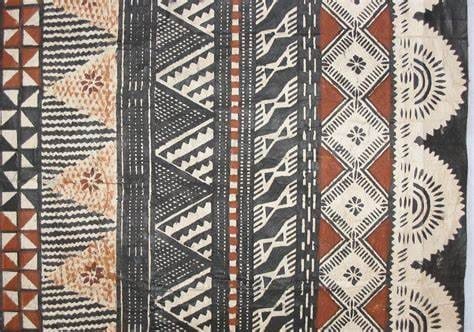
Tapa Cloth Sample
- Origins and Geographical Spread:
- Tapa cloth is made primarily in the islands of the Pacific Ocean, including:
- Tonga
- Samoa
- Fiji
- Niue
- Solomon Islands
- Cook Islands
- Futuna
- Vanuatu
- Java
- Papua New Guinea
- Hawaii (where it is called kapa)
- Tapa cloth is made primarily in the islands of the Pacific Ocean, including:
- Materials and Fabrication:
- Inner Bark of Trees: Tapa is crafted from the inner bark of trees such as paper mulberry (Broussonetia papyrifera) or breadfruit.
- Local Names: Each region has its own local name for tapa, but the term “tapa” is internationally understood.
- Historical Origins: Captain Cook was the first European to collect and introduce tapa to the rest of the world.
- Traditional Uses and Social Importance:
- Tonga: Known as ngatu, tapa holds great social importance and is often given as gifts.
- Samoa: The same cloth is called siapo.
- Niue: Referred to as hiapo.
- Hawaii: Known as kapa.
- Fiji: Called masi or ‘uha in Rotuma.
- New Zealand: Known as aute.
- Decorative Patterns: Tapa is decorated through rubbing, stamping, stenciling, smoking (Fiji: masi kuvui, “smoked barkcloth”), or dyeing.
- Traditional Dyes: Colors are usually black and rust-brown, although other hues are also used.
- Contemporary Use and Challenges:
- Clothing and Textiles: Tapa was historically used for clothing, but cotton and other textiles have largely replaced it.
- Strength and Durability: Tapa cloth loses strength when wet, making it less practical for everyday wear.
- Labour-Intensive Craft: Manufacturing tapa is labor-intensive, but it remains a symbol of cultural heritage.
Matryoshka Dolls (Russia)
Keywords: Russian nesting dolls, hand-painted, folk motifs, mother-child symbolism, Symbol of Russian Culture
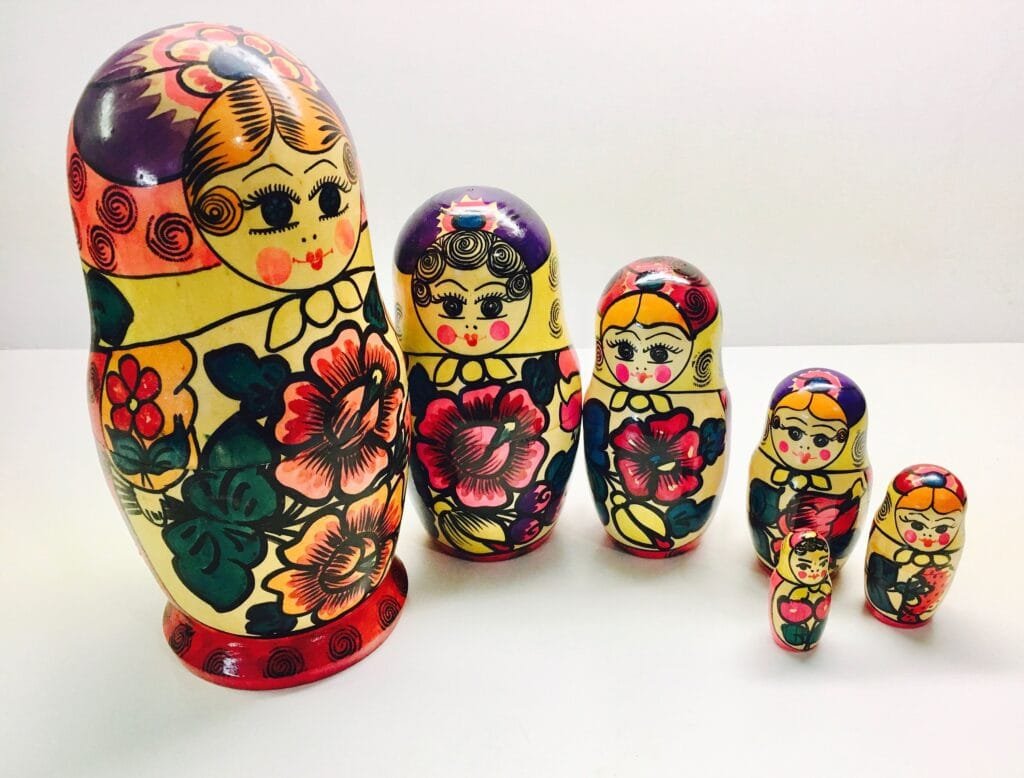
Matryoshka Russian Nesting Doll
- Origins and Design:
- Nested Dolls: Matryoshka dolls are a set of wooden dolls of decreasing size, placed one inside another.
- Traditional Appearance: The outermost doll is typically a woman dressed in a sarafan, a long and shapeless traditional Russian peasant jumper dress.
- Elaborate Painting: Much of the artistry lies in the intricate painting of each doll, which can depict various themes—from fairy tale characters to Soviet leaders.
- Historical Roots:
- First Set: The first Russian nested doll set was made in 1890 by woodturning craftsman Vasily Zvyozdochkin and designed by folk crafts painter Sergey Malyutin.
- Inspiration: The inspiration for Matryoshka dolls is believed to come from eastern Asian culture, although the Honshu dolls (named after the main island of Japan) cannot be placed one inside another.
- Symbolism and Themes:
- Unity and Family: The dolls symbolize traditional values of Russian society, including respect for the elderly, unity of the extended family, fertility, and abundance.
- Search for Meaning: Each layer represents a deeper level of understanding or truth, encouraging contemplation and introspection.
- Variety and Collectibility:
- Themes and Characters: Matryoshka dolls often follow specific themes, such as fairy tales, animals, or historical figures.
- World Records: The largest set of Matryoshka dolls in the world consists of 51 pieces, hand-painted by Youlia Bereznitskaia of Russia. The tallest doll measures 53.97 centimeters (21.25 inches), while the smallest is just 0.31 centimeters (0.12 inches).
Whether displayed as art, collected as souvenirs, or cherished as symbols of Russian culture, Matryoshka dolls continue to captivate people around the world.
Kente Cloth (Ghana)
Keywords: Ghanaian kente, vibrant fabric, color symbolism, ceremonial wear, Woven Stories of Ghana
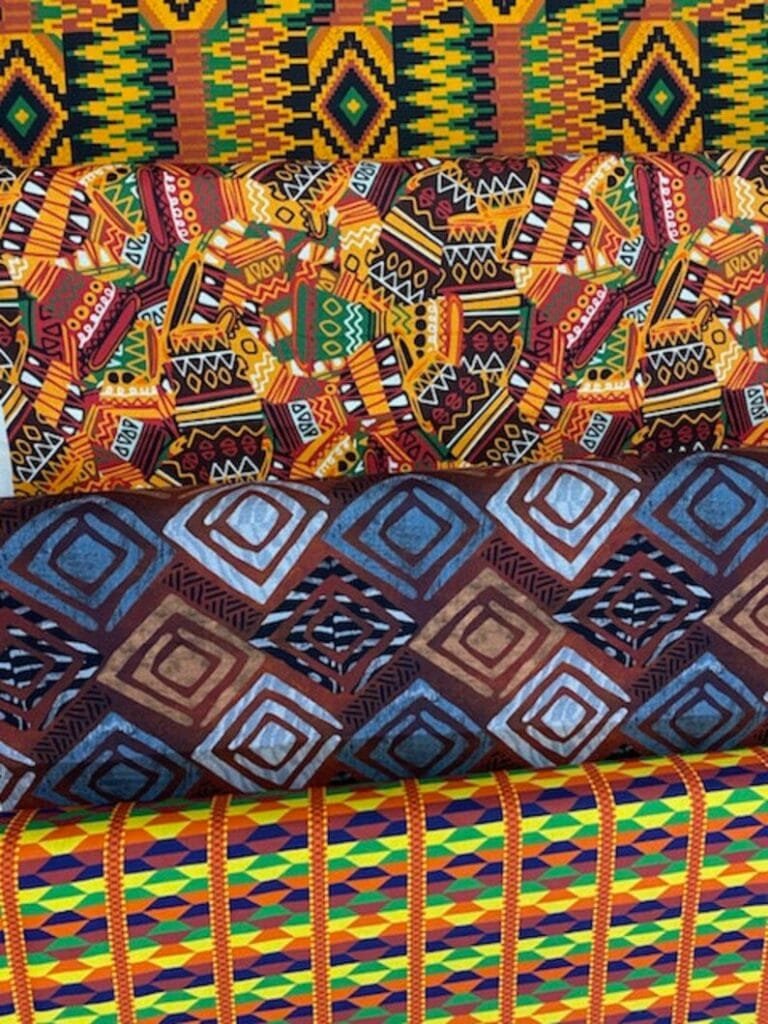
Ghana Kente Cloth Style
- Origins and Cultural Significance:
- Hand-Woven Strips: Kente cloth is made of hand-woven strips of silk and cotton.
- Historical Royalty: Historically, Kente was worn in a toga-like fashion by royalty among the Akan and Ewe peoples in Ghana.
- Bonwire: According to Ashanti oral tradition, Kente originated from Bonwire, a town in the Ashanti region of Ghana.
- Etymology and Symbolism:
- Kente: The word “Kente” comes from kenten, meaning “basket” in the Asante dialect of the Akan language.
- Nwentoma: The Akan ethnic group also refers to Kente as nwentoma, meaning “woven cloth.”
- Spider’s Web: Ashanti folklore tells a story where weavers invented Kente by seeking to replicate the intricate patterns of Anansi the spider.
- Historical Roots and Development:
- Weaving Traditions: West African cultures have been weaving textiles for thousands of years.
- Archaeological Evidence: Archaeological evidence for the oldest form of handloom weaving in Southern Ghana dates back to the 14th–18th centuries.
- Bonwire Origins: Asante oral tradition attributes the origins of Kente to an individual from Bonwire who introduced a loom among the Asante during the reign of Nana Oti Akenten in the 17th century.
- Spider Inspiration: Another oral source states that Kente was developed indigenously by individuals from Bonwire during the reign of Osei Kofi Tutu I, inspired by the web designs of a spider.
- Royal Cloth and Special Occasions:
- Asantehene’s Adoption: Asantehene Osei Tutu I adopted Kente as a royal cloth reserved for special occasions.
- Widespread Use: In modern Ghana, Kente is worn widely to commemorate special events.
- Ewe People: Kente is also worn in parts of Togo and Ivory Coast by the Ewe and Akan people there.
Whether draped as a ceremonial robe, displayed as art, or worn during graduations, Kente cloth continues to be a vibrant symbol of cultural pride and creativity in Ghana and beyond.
Bamboo Crafts (Japan)
Keywords: Japanese bamboo, weaving, tea utensil, Symphony of Tradition and Innovation
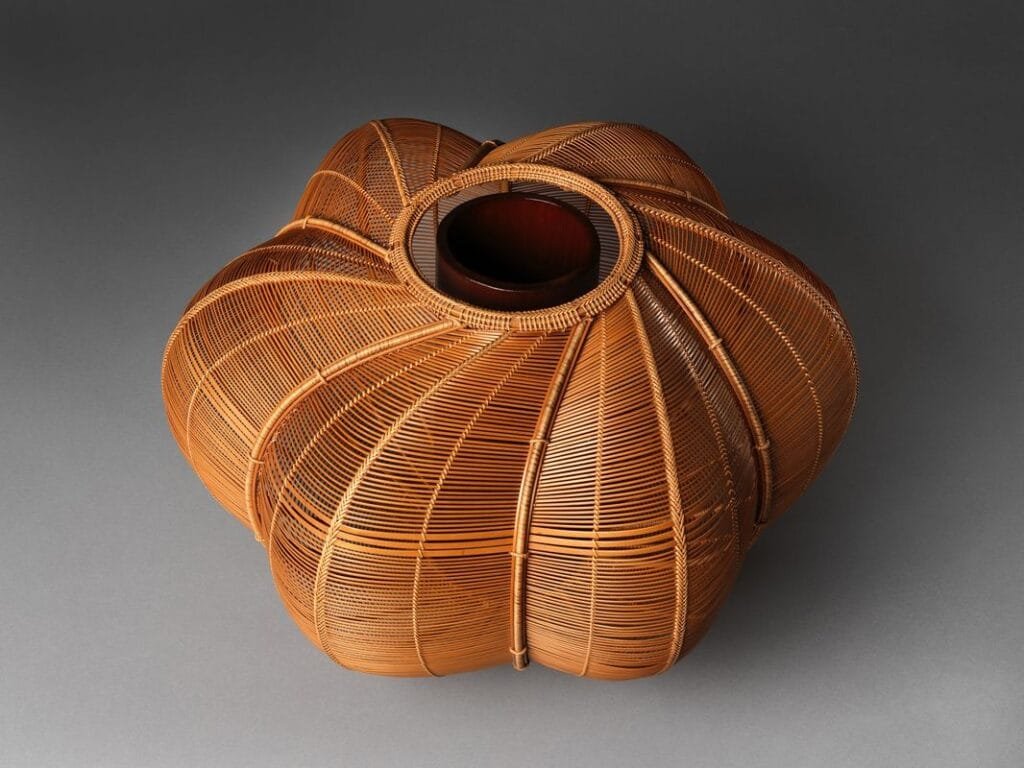
Japanese Bamboo Artwork : Yamaguchi
- Historical Roots:
- Ancient Tradition: Bamboo has been used in Japan for various purposes since ancient times.
- Tea Ceremony: Bamboo plays a crucial role in the Japanese tea ceremony (chanoyu), where it is used for making tea whisks (chasen), tea scoops (chashaku), and water ladles (hishaku).
- Bamboo Artisans:
- Kyoto: The city of Kyoto is renowned for its bamboo artisans who create intricate and functional pieces.
- Ogura Chiemi: Kyoto-based artist Ogura Chiemi uses age-old techniques to shape bamboo into delicate, lace-like patterns, creating captivating accessories and ornaments.
- Hexagonal Patterns: Ogura specializes in creating delicate hexagonal patterns called mutsume ami, which were commonly used for farming items like baskets.
- Modern Innovations:
- Contemporary Art: Bamboo crafts have evolved beyond traditional tea utensils.
- Sophisticated Shapes and Colors: Modern bamboo creations feature sophisticated shapes and eye-catching colors.
- Nature-Inspired Motifs: Natural motifs such as peonies, laurel trees, and pine trees showcase the artist’s love for nature.
Whether displayed as art, used for practical purposes, or cherished as symbols of Japanese craftsmanship, bamboo continues to inspire creativity and admiration in Japan and beyond.
Tinikling (Philippines)
Keywords: Filipino dance, bamboo poles, rhythmic footwork, birdlike agility, Dance of Grace and Agility
- Origins and Cultural Significance:
- Traditional Philippine Folk Dance: Tinikling originated prior to Spanish colonialism in the Philippines.
- Bamboo Poles: The dance involves at least two people beating, tapping, and sliding bamboo poles on the ground and against each other in coordination with one or more dancers who step over and in between the poles.
- Rondalla Music: Tinikling is traditionally danced to rondalla music, a serenade played by an ensemble of stringed instruments originating from Spain during the Middle Ages.
- Inspiration from Tikling Birds:
- Tikling Birds: The name “tinikling” is a reference to birds locally known as “tikling.”
- Bird Movements: The dance imitates the movement of tikling birds as they walk between grass stems, run over tree branches, or dodge bamboo traps set by rice farmers.
- Legend and Historical Origins:
- Legend: According to legend (without historical evidence), tinikling originated from Filipino field workers during Spanish colonization.
- Punishment Turned Art: Initially, workers were punished by two spine-tipped bamboo poles hitting their feet. Over time, they trained themselves to dodge the strikes, turning it into an art form and dance.
- Modern Relevance:
- Teaching in the United States: Tinikling is taught throughout the United States, especially in K-12 physical education classes.
- Filipino Independence Day: It is commonly performed at schools and special occasions, celebrating Filipino culture and pride.
Whether danced at schools, cultural events, or Filipino Independence Day celebrations, tinikling continues to showcase grace, agility, and the spirit of the Philippines.
Ikat (Indonesia and Central Asia)
Keywords: Ikat textiles, dyeing technique, pre-weaving dyeing, vibrant patterns, The Art of Bound and Dyed Threads
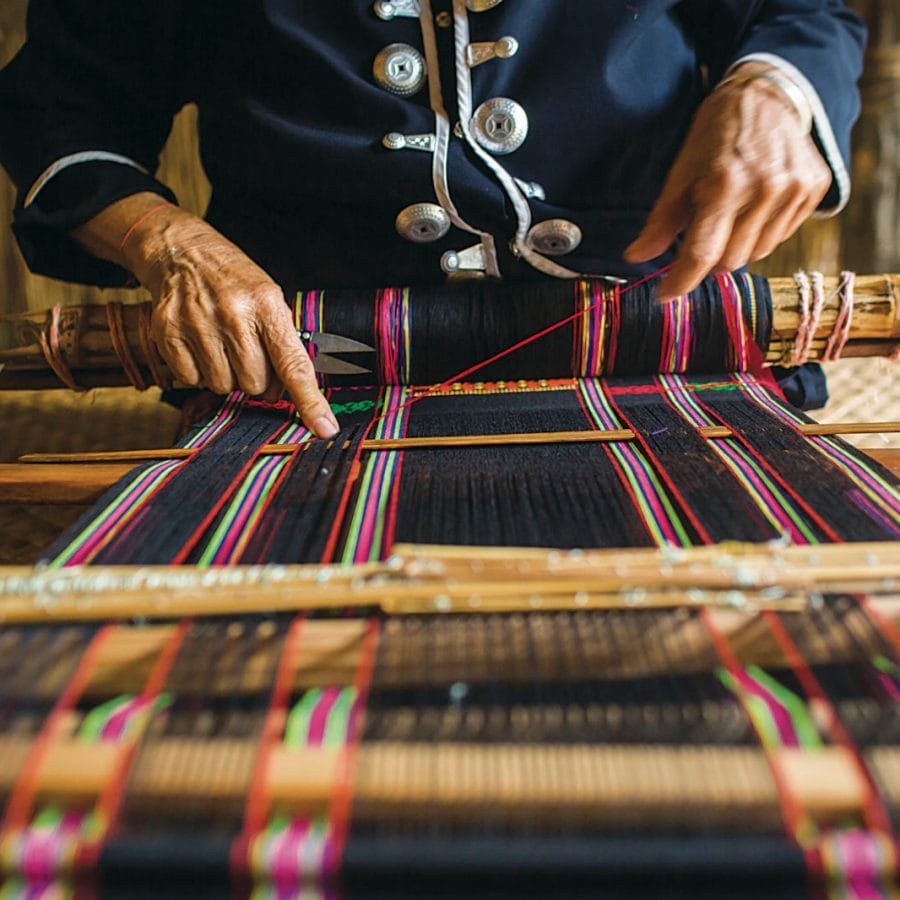
IKAT Indonesian Textile (Crafting Technique)
- Ikat Technique:
- Resist Dyeing: Ikat is a style of weaving that uses a resist dyeing process on either the warp or weft threads before they are woven to create a pattern or design.
- Malay-Indonesian Term: The term “ikat,” used in the West to describe these fabrics, is derived from the Malay-Indonesian verb mengikat, which means “to bind, tie, or wind around.”
- Complex Process:
- Binding Threads: Ikat is created by binding threads to form areas that will resist color application.
- Colorful Motifs: The more colorful and intricate the motifs, the longer and more elaborate the binding and dyeing process before weaving the cloth begins.
- Blurred Edges: Despite meticulous care in binding, resist dyeing inevitably results in motifs with blurred edges due to unpredictable distortions during the dyeing and weaving processes.
- Golden Age of Ikat:
- Urban Renaissance: Central Asian ikats emerged as a compelling art form during the region’s urban renaissance in the 19th and early 20th centuries.
- Inter-Ethnic Cooperation: Brilliant ikats were the result of complex inter-ethnic cooperation, with Muslim and Jewish artisans collaborating to create these fabrics.
- Symbol of National Identity: These fabrics remain a symbol of national identity and pride in the Republics of Central Asia, including Kazakhstan, Kyrgyzstan, Tajikistan, Turkmenistan, and Uzbekistan.
Whether displayed as art, worn as clothing, or cherished as cultural treasures, Central Asian ikats continue to weave stories of craftsmanship, trade, and tradition.
Moroccan Treasures
Moroccan Handicrafts
Keywords: Moroccan carpets, traditional clothing, jewelry, ceramics, wrought iron, woven objects, Thuya wood
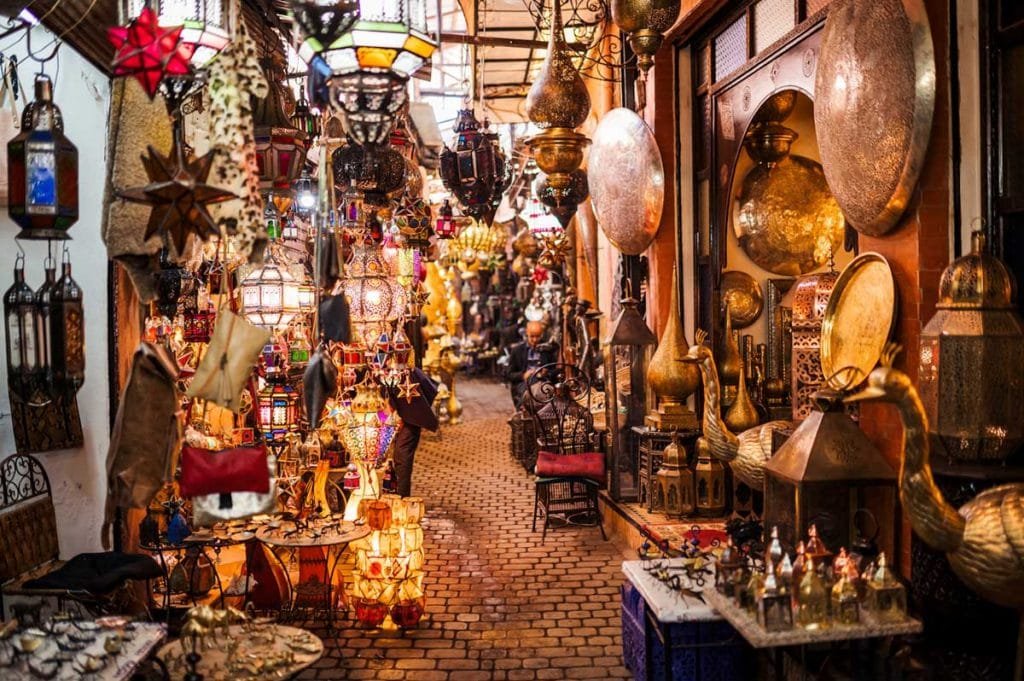
Typique Moroccan souk (Marrakech Semarine)
Moroccan Handicrafts, where creativity, tradition, and skilled craftsmanship converge. Morocco, with its vibrant markets and cultural heritage, offers a treasure trove of unique and beautiful crafts. Each piece whispers of ancient traditions and modern flair. Here’s a closer look at some of Morocco’s most captivating handicrafts:
- Moroccan Carpets and Rugs:
- From the bustling markets of Ouarzazate to the coastal town of Tetouan, Moroccan carpets and rugs are handwoven treasures that tell tales of desert sands and mountain peaks.
- Knot by knot, artisans create intricate patterns that adorn floors and walls, adding warmth and beauty to homes and palaces alike.
- Traditional Clothing:
- Moroccan fashion blends elegance with comfort. Caftans, flowing and embellished robes, are worn during special occasions, weddings, and celebrations.
- Slip into soft babouches, traditional leather slippers, and feel the connection to ancient traditions. Each piece whispers of timeless beauty and cultural pride.
- Jewelry:
- Wander through Marrakech’s bustling medina, where narrow alleys reveal hidden treasures. Silver and gold jewels gleam, adorned with Amazigh designs and Berber motifs.
- The intricate craftsmanship of Moroccan jewelry reflects centuries of artistry and cultural exchange.
- Ceramics and Pottery:
- In the coastal town of Safi, multicolored pottery dazzles with vibrant hues. Fez’s blue tiles (zellige) adorn mosques and palaces, creating mesmerizing geometric patterns.
- Meknes’ green glazes evoke the lush landscapes of Morocco. Ceramics are not just functional; they are works of art.
- Wrought Iron:
- Stroll through the bustling streets of Marrakech, where candelabras, mirrors, and lanterns crafted from wrought iron grace homes and gardens.
- The delicate balance of strength and elegance in wrought ironwork adds a touch of magic to Moroccan architecture.
- Woven Objects:
- From the ancient city of Fez to the coastal town of Salé, woven wonders celebrate natural materials. Baskets, mats, and decorative pieces showcase the artistry of Moroccan artisans.
- These functional yet beautiful objects are a testament to the resourcefulness and creativity of Moroccan craftsmen.
- Marquetry and Thuya Wood:
- In Essaouira, Thuya wood marquetry enchants. Precious wood from the Atlas Mountains becomes intricate boxes, trays, and chessboards.
- The delicate inlay work and unique patterns reflect Morocco’s rich cultural heritage.
Whether displayed as art, used for practical purposes, or cherished as cultural treasures, Moroccan handicrafts continue to weave stories of resilience, creativity, and the spirit of Morocco.
Moroccan Zellige
Keywords : : The Art of Mosaic Mastery, Artistic heritage, Pottery of Fez, Moroccan culture, Skilled artisans
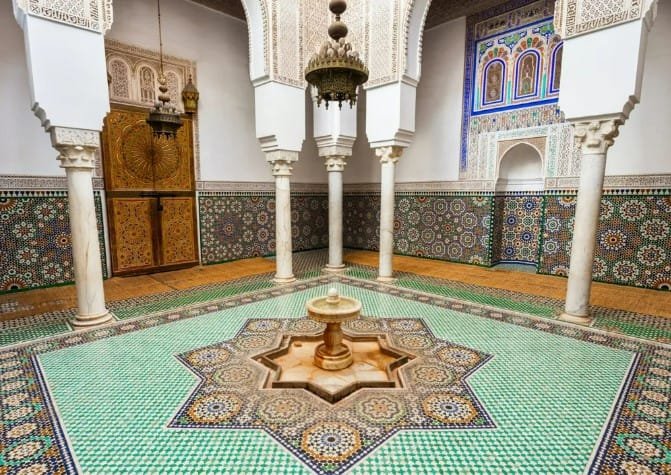
Typique Moroccan Medina House (Riad)
- Origins and Historical Significance:
- Ancient Roots: Zellige dates back to the 10th century in Morocco.
- Moroccan Influence: The art form was influenced by moroccan craftsmen who migrated to Andalusia during the Almoravid and Almohad dynasties.
- Islamic Aesthetics: Zellige embodies Islamic aesthetics, emphasizing geometric patterns, symmetry, and intricate designs.
- The Zellige Technique:
- Hand-Cut Tiles: Zellige tiles are hand-cut from terra cotta, glazed, and fired.
- Small Pieces, Big Impact: These small, colorful pieces are meticulously arranged to create mesmerizing patterns.
- Beveled Edges: The edges of each tile are beveled to create a seamless fit.
- Geometric Patterns and Symbolism:
- Infinite Combinations: Zellige patterns include stars, polygons, and interlocking shapes.
- Symbolic Meanings: Some patterns symbolize protection, harmony, or spiritual significance.
- Color Symbolism: Colors hold cultural and spiritual meanings. For example:
- Blue: Represents divinity and protection.
- Green: Symbolizes paradise and nature.
- White: Signifies purity and spirituality.
- Zellige in Moroccan Architecture:
- Archways and Walls: Zellige adorns archways, fountains, mosques, and palaces.
- Medersas and Riads: Visit the Bou Inania Medersa in Fès or the Bahia Palace in Marrakech to witness stunning Zellige work.
- Riads: Many riads (traditional Moroccan houses) feature Zellige in their courtyards and interiors.
- Preserving an Ancient Craft:
- Artisans and Maâlems: Skilled artisans, known as maâlems, pass down the craft through generations.
- Revival and Appreciation: There has been a revival of interest in Zellige, both within Morocco and internationally.
- Unique Vibration: Moroccan Zellige is more than just a decorative element; it vibrates with the spirit of Morocco.
- Steps To Make Morrocan Zellige
Whether gracing the walls of a riad, adorning a fountain, or creating intricate patterns in a mosque, Moroccan Zellige continues to captivate with its timeless beauty and cultural significance.
Conclusion : Legacy of Creativity
Craftsmanship continues to thrive, bridging the gap between tradition and modernity. Its economic impact, cultural significance, and contribution to our global heritage remain undeniable. As we celebrate craftsmanship, let’s appreciate the artisans who shape our world with their skillful hands and creative minds.
Ranking of Countries with Relevant Craftsmanship
- Italy: Located just north of Venice, the island of Murano is one of the best places in the world to witness the art of glass blowing. The Venetian glassblowers skillfully create intricate glass pieces using traditional techniques.
- Morocco: In the city of Fez, leather tanners maintain a craft that hasn’t changed since the 11th century. Amidst the low-lying buildings, the Chouara tannery stands out, where artisans treat and stain leather using natural dyes like saffron and henna.
- Poland: Polish craftsmanship combines tradition with innovation, producing high-quality goods across various domains.
- Germany: Renowned for precision and attention to detail, German artisans contribute significantly to craftsmanship.
- Spain: Spanish craftsmanship spans diverse fields, from ceramics to textiles and leatherwork.
- China: Tibetan knife makers in Tibet continue their ancient craft, using materials like copper for blades and animal horns for handles. Their intricate designs and protective sheaths showcase their skill.
- Japan: Ikebana, the Japanese art of flower arranging, brings together nature and humanity. Skilled ikebana practitioners create harmonious compositions using carefully selected flowers and branches
Original Facts about Craftsmanship
- Japanese Origami:
- Origami, the ancient Japanese art of paper folding, transforms a simple sheet of paper into intricate sculptures. From delicate cranes to complex dragons, origami captures the essence of patience and precision.
- Indian Block Printing:
- In India, artisans use wooden blocks to print intricate patterns on fabric. Each block is meticulously carved, and the resulting textiles showcase vibrant colors and timeless designs.
- Mexican Talavera Pottery:
- Talavera pottery from Puebla, Mexico, combines Spanish and indigenous influences. The hand-painted ceramics feature bold colors and intricate geometric motifs, adorning homes and gardens worldwide.
- Turkish Carpets and Kilims:
- Turkish carpets and kilims are woven with care and skill. The Anatolian region produces stunning rugs, each telling a story through its patterns and symbols. These textiles add warmth and beauty to any space.
- Ghanaian Kente Cloth:
- Kente cloth, originating from Ghana, is a symbol of cultural pride. Woven by Ashanti and Ewe weavers, it features vibrant colors and intricate geometric designs. Each pattern carries specific meanings and traditions.
- Chinese Porcelain:
- Chinese porcelain, dating back centuries, is renowned for its delicate beauty. From Ming vases to blue-and-white ceramics, these pieces reflect China’s rich artistic heritage and mastery of clay and glaze.
- Russian Matryoshka Dolls:
- Matryoshka dolls, also known as Russian nesting dolls, captivate with their nested design. Skilled artisans hand-paint these wooden dolls, creating a delightful surprise as each one reveals another inside.
FAQ : Craftsmanship Unveiled
- What Is the Traditional Craftsmanship of Italy?
- Italy is famous for its glass blowing on the island of Murano, just north of Venice. Skilled artisans create intricate glass pieces using techniques passed down since the 8th century. The molten glass is shaped by blowing into a hollow steel tube, resulting in stunning glassware and sculptures.
- What Unique Craftsmanship Comes from Tibet, China?
- Tibetan knife makers continue their ancient craft. Using materials like copper for blades and animal horns for handles, they create beautiful and functional knives. The intricate sheaths made from animal hides protect both the blades and the artisans hands.
- What Traditional Craft Persists in Morocco?
- In the city of Fez, Morocco, leather tanners maintain a craft that hasn’t changed since the 11th century. The Chouara tannery, resembling a giant honeycomb, treats and stains animal hides using natural dyes like saffron and henna. The skins are then dried on surrounding rooftops under the North African sun1.
- What Art Form Thrives in Japan?
- Ikebana, the Japanese art of flower arranging, brings together nature and humanity. Skilled practitioners create harmonious compositions using carefully selected flowers and branches. Each arrangement tells a story and celebrates the beauty of impermanence.
- What Are Matryoshka Dolls, and Where Are They From?
- Known worldwide, Matryoshka or nesting dolls are the pride of Russian handicrafts. These wooden dolls of decreasing sizes, placed one inside another, often depict traditional Russian peasant girls. Each doll is hand-painted with fine details, representing the high level of craftsmanship involved.
- How Does UNESCO Define Traditional Craftsmanship?
- According to UNESCO, craftsmanship products are made by artisans, either entirely by hand or with the aid of hand tools or mechanical means. The artisan’s direct manual contribution remains the most important component of the finished product. These crafts can be utilitarian, aesthetic, artistic, creative, culturally linked, decorative, functional, traditional, symbolic, and religiously or socially significant.
- What Challenges Does Craftsmanship Face in a Globalized World?
- Craftsmanship struggles with competition from mass production. Globalization often favors cheaper, factory-made goods over handmade items. Additionally, environmental pressures impact traditional crafts, affecting the availability of natural resources. Encouraging artisans to continue their craft and pass on their skills becomes crucial for preserving this heritage.
Remember, each country’s craftsmanship weaves a unique thread in the global tapestry of creativity !